About the Journal
Cakrawala Bimbingan dan Konseling is a scholarly journal that publishes articles reporting research findings, conceptual studies, and best practices in the field of guidance and counseling. The journal covers a wide range of topics in guidance and counseling, including individual counseling, group counseling, personal–social guidance, career guidance, academic guidance, school counseling, family counseling, as well as contemporary issues in guidance and counseling services.
This journal is intended for academics, practitioners, researchers, and students in the field of guidance and counseling and related disciplines, serving as a platform for scientific dissemination and the continuous development of knowledge in the field.
Current Issue
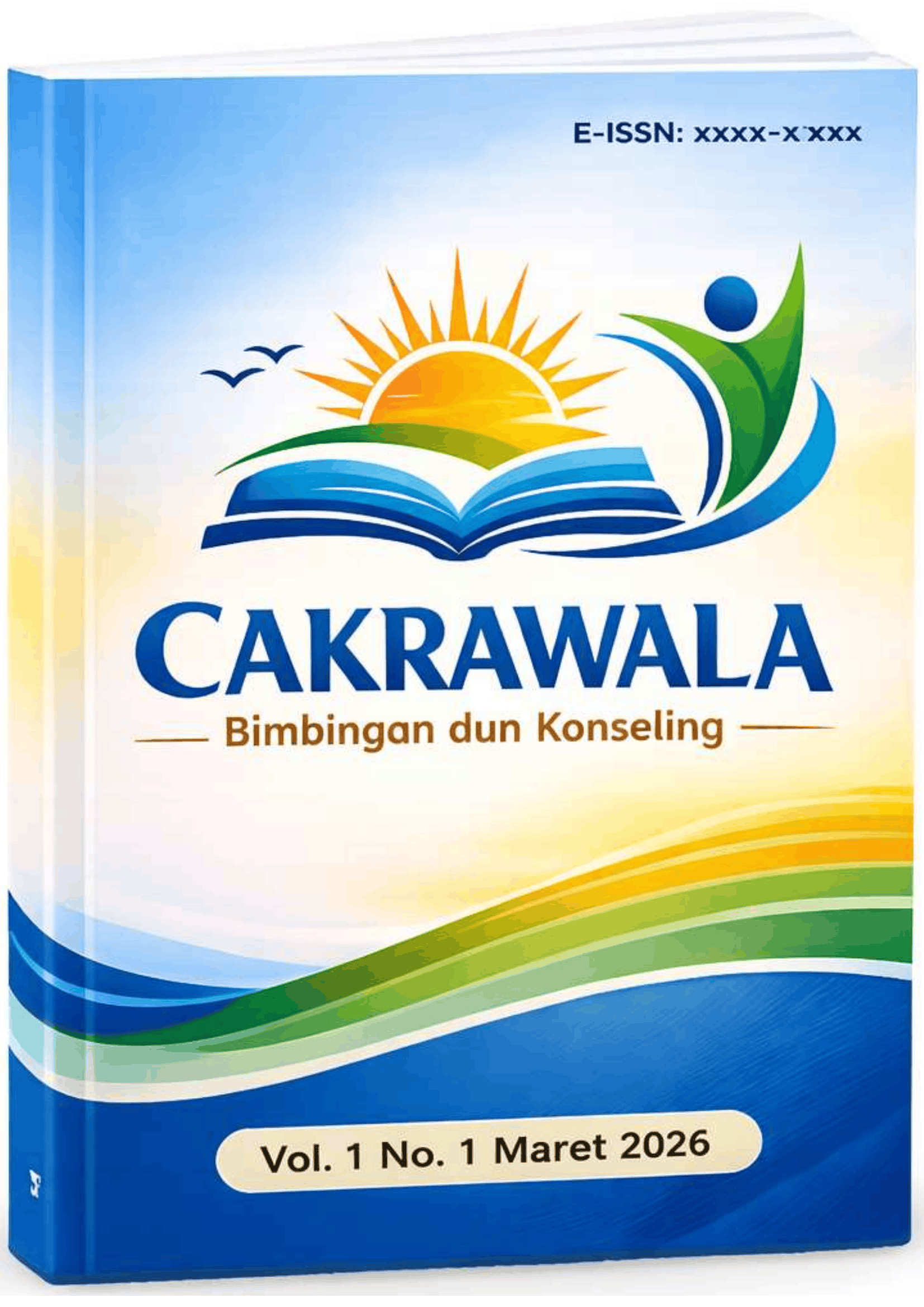
CAKRAWALA BIMBINGAN DAN KONSELING Volume 1 Number 1 (March 2026) marks the inaugural issue of the journal, presenting five scholarly articles that examine various contemporary issues in the field of guidance and counseling from both theoretical and empirical perspectives. The first article explores a conceptual model grounded in Rational Emotive Behavior Therapy (REBT) that explains the relationship between irrational beliefs and academic cheating behavior, highlighting the mediating role of catastrophising in elucidating the cognitive dynamics underlying such behavior.
The second article examines the contribution of self-efficacy and perceived parental expectation to vocational high school students’ career decision-making through a correlational research approach, highlighting the importance of strengthening self-efficacy and perceived parental expectation in fostering adolescents’ career decision-making abilities. The third article presents a research and development that produces a self-management guidebook within reality group counseling aimed at reducing academic procrastination among senior high school students. The study results in a product that meets the acceptability criteria in terms of accuracy, usefulness, feasibility, and attractiveness, indicating its potential application by school counselors in the implementation of counseling services in schools.
The fourth article examines the effect of the cinema education in group guidance for developing prosocial behavior among junior high school students. The findings indicate that the use of film within group dynamics can significantly enhance students’ prosocial behavior. The final article investigates the structure of irrational beliefs in relation to online game addiction among students using a structural model analysis approach within the REBT framework, highlighting the crucial role of low-frustration tolerance in explaining the tendency toward addictive behavior in online gaming.
Overall, the five articles in this issue enrich the body of knowledge in guidance and counseling through examinations of students’ cognitive and behavioral dynamics, the development of counseling techniques and interventions, and the exploration of psychological factors influencing student development. The findings presented are expected to contribute to the advancement of theory, the practice of guidance and counseling services in schools, and to serve as references for future research in the field of guidance and counseling.